What Temperature Hold Hot Food Safely?
A full pan of mac and cheese can look perfect on the line and still drift into the danger zone faster than most kitchens expect. If you are asking what temperature hold hot food safely, the short answer is 135°F or higher in most U.S. foodservice settings. The better answer is that safe hot holding depends on both temperature and the equipment’s ability to maintain it consistently through a busy service.
For operators, that difference matters. A steam table set too low, a warmer overloaded before a rush, or a lid left open for constant plating can pull food quality down while increasing food safety risk. Professional results require more than a target number. They require control.
What temperature hold hot food in a commercial kitchen?
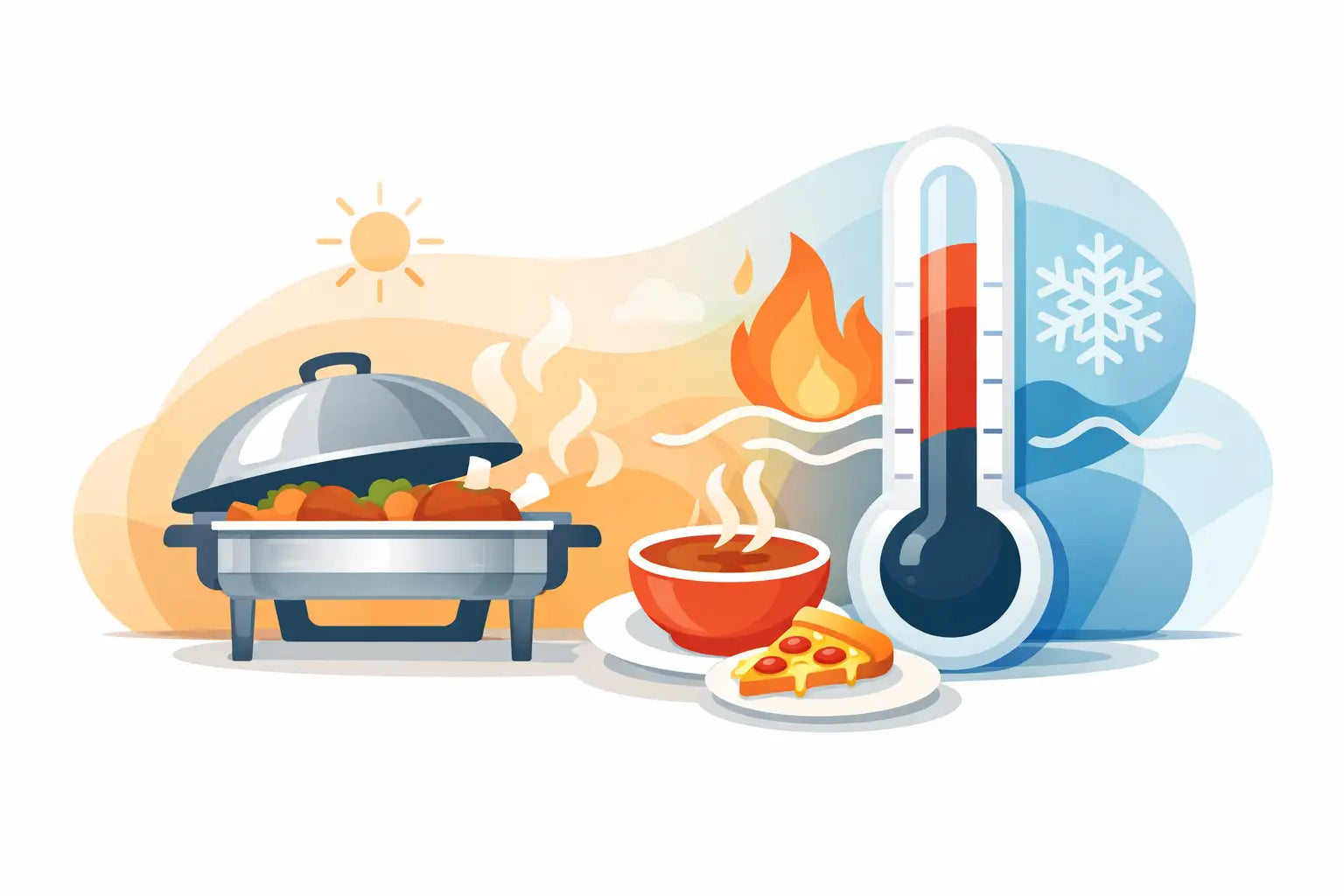
Hot food should generally be held at 135°F or above after it has been fully cooked or reheated. That threshold matters because bacteria grow rapidly between 41°F and 135°F, which is commonly called the danger zone. Once ready-to-serve food falls into that range for too long, safety becomes a real concern.
In practical kitchen terms, hot holding equipment is designed to maintain safe temperatures, not to cook food or reheat cold product. That distinction gets missed all the time. If chili comes out of refrigeration at 40°F and goes straight into a steam table, the unit may keep the top warm while the center lingers in an unsafe range. The food needs to be reheated to the proper internal temperature first, then transferred for holding.
This is where precision matters. Commercial warming drawers, heated display units, soup warmers, and steam tables are built to preserve serving temperature during service. They work best when the product entering them is already hot, the pan depth matches the application, and the equipment has enough output to recover heat when doors or lids are opened repeatedly.
Why 135°F is the standard
The 135°F benchmark is tied to food safety, but it also supports consistency on the plate. Proteins, sauces, soups, grains, and sides all perform differently during holding. Some hold well at 140°F to 165°F with minimal quality loss, while others begin to dry out or separate if the unit runs hotter than necessary.
That is why the best operating temperature is not always the bare minimum. If you hold carved brisket at exactly 135°F, you may meet the rule while sacrificing texture during a long service. If you hold mashed potatoes too aggressively, you can lose moisture and create crusting around the edges. Safe holding starts at 135°F, but ideal holding depends on the food, the equipment, and the length of service.
For high-volume kitchens, a small temperature cushion often makes sense. Running a unit slightly above the minimum can help offset temperature drops during frequent opening and serving. The trade-off is product quality. Better equipment gives you tighter control, so you are not forced to choose between safe and overcooked.
Hot holding is not reheating
This is one of the biggest operational mistakes in both commercial kitchens and serious home setups. Hot holding equipment maintains temperature. It does not rapidly bring food through the danger zone.
If food has cooled, it must be reheated properly before it goes back into service. In many regulated settings, that means reheating to 165°F for at least 15 seconds before transferring to a holding unit. From there, the warmer’s job is to keep the product at 135°F or above.
The distinction matters when you are planning equipment capacity. A steam table is not a substitute for a convection oven, range, or rethermalization setup. If your line depends on warming equipment to do both jobs, service will become inconsistent and food safety will get harder to manage.
The equipment affects the result
When operators ask what temperature hold hot food, they are often really asking whether their equipment can maintain that standard under pressure. The answer depends on the type of unit, the food being served, and the workflow around it.
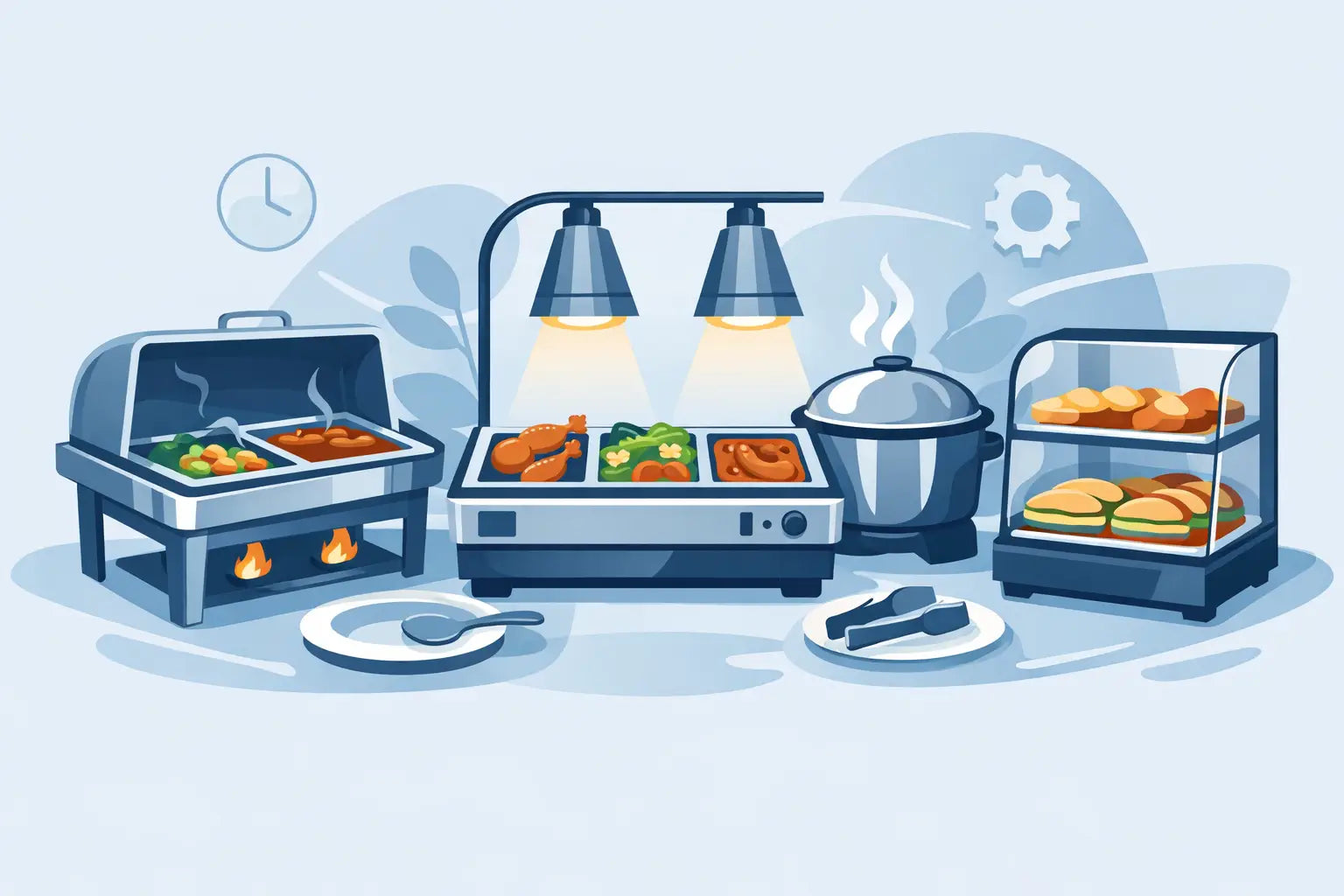
Steam tables are strong performers for moist foods like vegetables, sauces, gravies, and pasta. They use wet heat to protect texture, but they still need correct water levels, pan coverage, and preheating. Heated display cases are excellent when presentation matters, especially for grab-and-go service or front-of-house merchandising. Warming drawers help stage finished plates or hold wrapped items with stable heat in compact footprints. Soup warmers work well for liquid products but can create hot spots if stirred too infrequently.
Dry heat and moist heat each have their place. Dry heat is often better for crisp items that would turn soft in steam, but it can dehydrate food over time. Moist heat protects against drying but may affect texture on fried or baked products. The right choice is operational, not just technical.
That is why specification-driven buyers look beyond price. Recovery time, thermostat accuracy, insulation, pan capacity, and service access all affect real performance. In a busy kitchen, weak heat recovery can mean a safe temperature on paper and uneven food in practice.
How to hold hot food safely during service
The strongest hot holding systems support process, not just hardware. Start by preheating the unit before loading any food. Adding hot product to a cold warmer creates an avoidable temperature drop right when service begins.
Use a calibrated food thermometer to check actual food temperature, not just the control dial or display. Equipment settings tell you what the unit is trying to do. They do not confirm what is happening in the pan. Thick foods like beans, queso, or stew should be checked in multiple spots because heat can distribute unevenly.
Keep lids and doors closed as much as practical. Every opening releases heat and forces the unit to recover. During a heavy rush, frequent access can pull temperatures lower than expected, especially in smaller countertop units.
Do not overfill pans. Dense, deep pans slow heat transfer and make it harder for the center to stay above 135°F. Stir hot foods at regular intervals when appropriate. This helps distribute heat and prevent cooler pockets, especially in sauces and soups.
Time also matters. Even when food stays in the safe zone, long holding times can reduce quality. Some products tighten up, skin over, dry out, or lose color. Safe does not always mean saleable. The best operators track both temperature and hold time so product quality stays aligned with brand standards.
What can go wrong even if the warmer is on?
A surprising amount, especially in kitchens that are moving fast. One common problem is loading too much cold or room-temperature product into a unit all at once. Another is trusting the built-in gauge without verifying actual food temperature. A third is using the wrong equipment for the menu.
For example, fried chicken held in a moist environment can stay warm but lose the texture customers expect. Sliced roast beef in a dry cabinet may remain safe while drying along the edges. In both cases, the issue is not whether the warmer turns on. It is whether the holding method matches the product.
There is also the maintenance factor. Scaled heating elements, damaged door gaskets, inconsistent thermostats, and poor airflow can all reduce holding performance. Commercial kitchens ask a lot from this equipment. Reliability depends on regular cleaning, inspection, and realistic load planning.
Serious home cooks need the same discipline
If you cater from home, host large gatherings, or run an outdoor cooking setup with professional ambitions, the same rule applies. Hold hot food at 135°F or above. Chafers, countertop warmers, heated shelves, and warming drawers can all help, but they need to be used correctly.
Consumer-grade gear often has wider temperature swings than commercial units, so monitoring becomes even more important. If you are serving a crowd buffet-style, check temperatures throughout the event instead of assuming the setup is holding steady. A stylish presentation does not guarantee safe service.
This is one reason serious buyers often move toward commercial-grade warming equipment. Better build quality, stronger heat retention, and more precise controls support the kind of consistency that matters when food is on display and guests are waiting.
Choosing a hot holding setup that supports performance
The best system starts with the menu. Moist entrees, carved proteins, plated dishes, grab-and-go items, and self-serve sides all have different holding needs. Your ideal temperature range, footprint, and heating method should reflect what you serve and how you serve it.
A compact operation may need undercounter warming or countertop capacity that saves line space. A cafeteria or buffet may need multi-pan steam tables with strong recovery. Catering and banquet service may prioritize transport-friendly holding cabinets. Precision is not just about temperature. It is about matching output to demand without sacrificing safety or consistency.
For kitchens that value speed, control, and dependable daily performance, equipment choice is not a minor purchase. It is part of the operating system. Culinary Precisions serves buyers who understand that professional results depend on equipment built to hold up under real service conditions.
The target is simple: keep hot food at 135°F or above. The real win is building a setup that hits that mark every shift while protecting texture, flavor, and service pace.