Gas Electric Fryers: Which Heat Fits Your Line?
The lunch rush exposes every weak point in a fry station. A basket of fries drops, tickets stack, oil temperature falls, and the equipment has only minutes to prove whether it belongs on the line. When operators compare gas electric fryers, they are really weighing two distinct approaches to heat, recovery, installation, and daily control.
Neither fuel type wins in every kitchen. The right fryer is the one that supports your menu volume, utility conditions, ventilation plan, staff habits, and the rhythm of service. A thoughtful choice protects more than throughput. It protects crisp texture, oil life, labor, and the guest experience attached to every plate.
Gas Electric Fryers: Start With the Service Rhythm
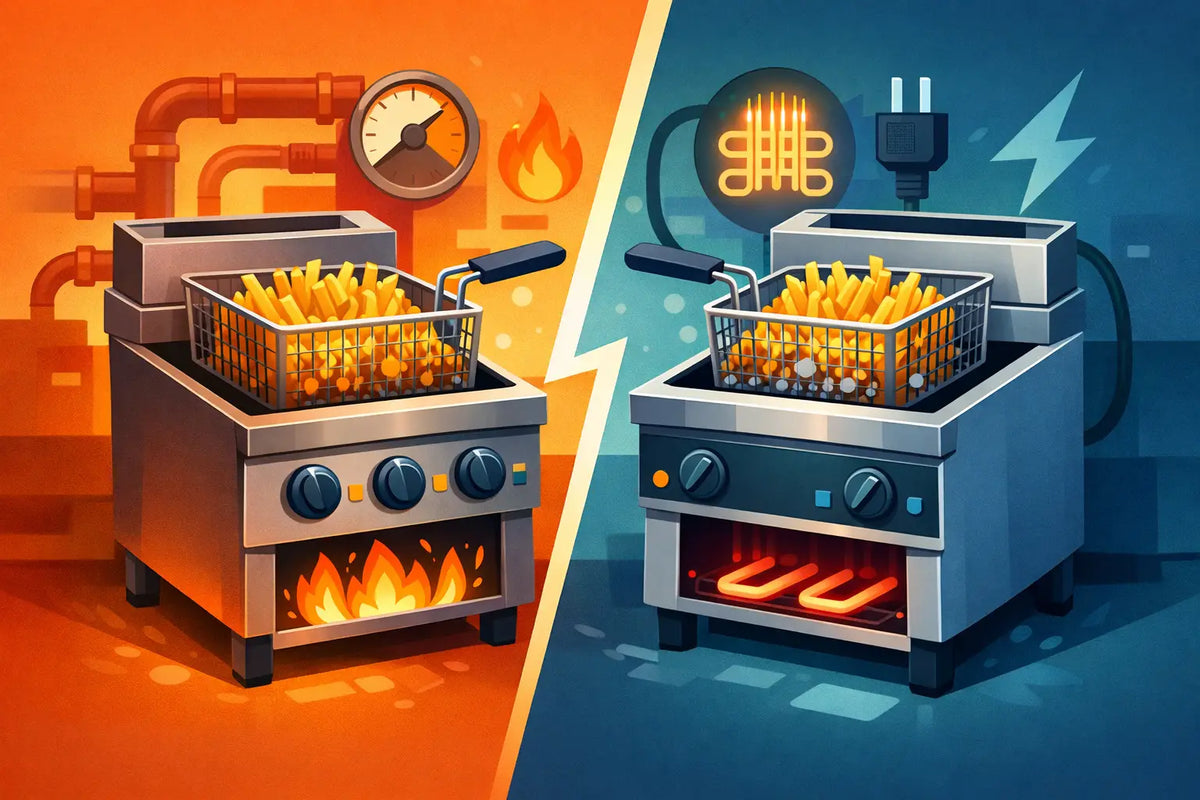
Gas fryers create heat through burners beneath the frypot or through high-efficiency tube, open-pot, or infrared-style systems, depending on the model. They are prized in high-volume operations for strong heat input and fast recovery after large, repeated product drops. For a busy restaurant, sports bar, food truck concept, or catering kitchen turning out fries, wings, breaded appetizers, and proteins all day, that recovery capacity can be decisive.
Electric fryers use immersed heating elements in or near the oil. Their heat is direct, controlled, and exceptionally responsive at the frypot. Because the energy goes straight into the oil rather than first heating the surrounding metal and air, electric units can offer impressive efficiency and a very even temperature environment. They are often a strong fit for kitchens where utility infrastructure favors electric service, where precise product consistency matters, or where an all-electric build is part of the operating plan.
The distinction is not simply raw power versus precision. A properly sized electric fryer can keep pace beautifully with a focused menu and disciplined batch sizes. A gas fryer can produce excellent consistency when its capacity, filtration routine, and operating practices match the demand. The issue is matching the machine to the work.
Recovery Rate Matters More Than the Spec Sheet Alone
Recovery rate is the fryer’s ability to bring oil back to its set temperature after food enters the pot. It shapes the crust of a French fry, the color of battered fish, and the clean finish of a wing. Slow recovery extends cook times and invites excess oil absorption. The result is food that feels heavy instead of crisp.
Gas models are frequently selected for aggressive peak-period output. Their burner systems can be particularly effective in operations with frequent large drops and high pounds-per-hour production requirements. If the line sees a hard rush followed by another hard rush, gas may provide the reserve capacity the menu demands.
Electric models are not automatically the slower choice. Their elements are in close contact with the oil, so they can transfer heat efficiently and maintain a stable temperature with smaller, regular batches. That is valuable for operators frying delicate items, specialty batters, tempura, gluten-free products, or small batches that must look and taste identical from open to close.
The best question is not, “Which fryer recovers faster?” Ask, “How much cold product will our team drop at one time, and how often?” A high-output wing program has different needs than a chef-driven bistro serving pommes frites in measured portions. Capacity should be sized to the busiest 15 minutes of service, not the average afternoon.
Installation Sets the Boundaries
A fryer purchase begins with the site. Gas equipment requires the correct gas supply, shutoff arrangement, regulator considerations, and professional connection. Electric equipment needs sufficient voltage, phase, amperage, and a properly sized dedicated circuit. Both typically require a commercial hood system and compliance with local fire, ventilation, and building codes.
This is where a seemingly simple fuel decision can become an infrastructure decision. A location with abundant gas capacity and an established cook line may find gas installation straightforward. A new all-electric kitchen, a venue with limited gas service, or certain institutional and hospitality projects may be better prepared for electric fryers.
Do not overlook physical planning. Verify fryer width, clearances, hood coverage, aisle space, floor load, and the route from receiving to the cook line. If the fryer includes built-in filtration, consider how its cabinet footprint affects adjacent equipment. A beautifully specified unit still needs enough room for staff to filter oil, clean behind the equipment, and move safely through service.
For outdoor or nontraditional cooking environments, the decision deserves even more care. Equipment must be rated and installed for its intended setting, with utilities and fire protection designed accordingly. Commercial-grade heat belongs in a well-considered workspace, not an improvised corner.
Oil Management Is Part of the Fuel Decision
Oil is one of the most important ingredients in a fryer program, and it is also a meaningful operating cost. Better temperature recovery and less idle energy can help preserve its performance, but daily habits matter just as much.
Electric fryers are often valued for energy efficiency and precise temperature control, particularly during lower-volume periods. Since their heating elements transfer energy directly to the oil, they can be an attractive choice for operations watching utility use closely. Gas fryers may offer a compelling operating equation where gas rates are favorable and sustained production is high.
Actual oil life depends on the menu. Breaded proteins, sugary glazes, heavily seasoned coatings, and high-moisture foods all accelerate breakdown. A fryer with a cold zone beneath the cooking area can help collect crumbs and sediment away from the hottest oil, reducing scorching. The exact design differs by model, so compare frypot geometry instead of assuming all units manage sediment the same way.
Built-in filtration deserves serious attention for any operation with meaningful fry volume. It makes regular filtering easier to execute, and the best system is often the one the team will actually use. When filtration can happen quickly between shifts or after a rush, oil stays cleaner, food color becomes more consistent, and the fry station feels more controlled.
Choose the Frypot for the Menu, Not Just the Capacity
Open-pot fryers are especially useful when menu flexibility and cleaning access are priorities. With fewer obstructions in the frypot, staff can more easily clean the interior and accommodate a range of basket sizes. They can be a practical choice for mixed menus that move between fries, vegetables, appetizers, and specialty items.
Tube-style gas fryers route heat through tubes in the oil, creating a cold zone below where particles can settle. They are familiar workhorses for breaded foods and high-volume production. Their internal tube configuration can require more deliberate cleaning, but many operators value the capacity and proven performance.
Electric fryers often feature open, accessible frypot designs around their elements, though construction varies. The right model depends on whether the menu emphasizes lightly battered seafood, crispy potatoes, wings, churros, or a tightly controlled specialty product. If allergens are a concern, dedicated frypots may be more valuable than pursuing a single oversized unit. Separate oil protects guests and preserves flavor integrity.
A Practical Way to Decide Between Gas and Electric
Before committing, build the decision around the operation rather than brand preference. Document daily fryer volume, peak-period drops, product mix, desired batch size, available utilities, hood capacity, and oil-filtration expectations. Then compare the actual performance data and installation requirements of models in the same production class.
Four signals usually point the decision in the right direction:
- Choose gas when sustained, high-volume production and strong peak recovery are the central demands, especially where gas infrastructure is already in place.
- Choose electric when direct heat control, efficient energy transfer, and a suitable electrical service align with the kitchen design.
- Prioritize built-in filtration when oil use is substantial and labor consistency is an ongoing challenge.
- Consider multiple smaller frypots when menu separation, allergen control, or varied cooking temperatures matter as much as total output.
Build a Fry Station That Holds Its Standard
A fryer should make the kitchen feel steadier when the pace rises. Pair the unit with landing space for baskets, sheet pans or dump stations that keep finished food crisp, heat-safe tools, and a disciplined oil-care routine. Keep raw product movement separate from cooked food, and establish clear batch standards so every cook recognizes the correct color, texture, and hold time.
Culinary Precisions approaches equipment selection as a matter of fit: the heat source, frypot design, dimensions, utility requirements, and service demands should all work together. A gas or electric fryer is not just another stainless cabinet on the line. It is a source of pace and precision, shaping the familiar pleasure of food that arrives hot, crisp, and exactly as intended.
Choose the fryer that gives your team control when the tickets are deepest. That is the heat worth building around.