Combi Oven Cooking for Consistent Service
The difference between a rushed kitchen and a composed one is often found in the space between heat and moisture. Combi oven cooking gives chefs control of both, allowing a single cabinet to roast chicken with bronzed skin, steam vegetables with clean color, bake bread with a crisp crust, and retherm prepared foods without turning them tired or dry. It is not simply a faster oven. It is a more deliberate way to build consistency into the rhythm of service.
For restaurants, caterers, hotels, institutions, and ambitious home kitchens, that control translates into practical gains: stronger yields, less pan shuffling, more predictable cook times, and food that arrives with its intended texture intact. The real value, however, comes from learning how the oven behaves across different products and production moments.
What Combi Oven Cooking Changes
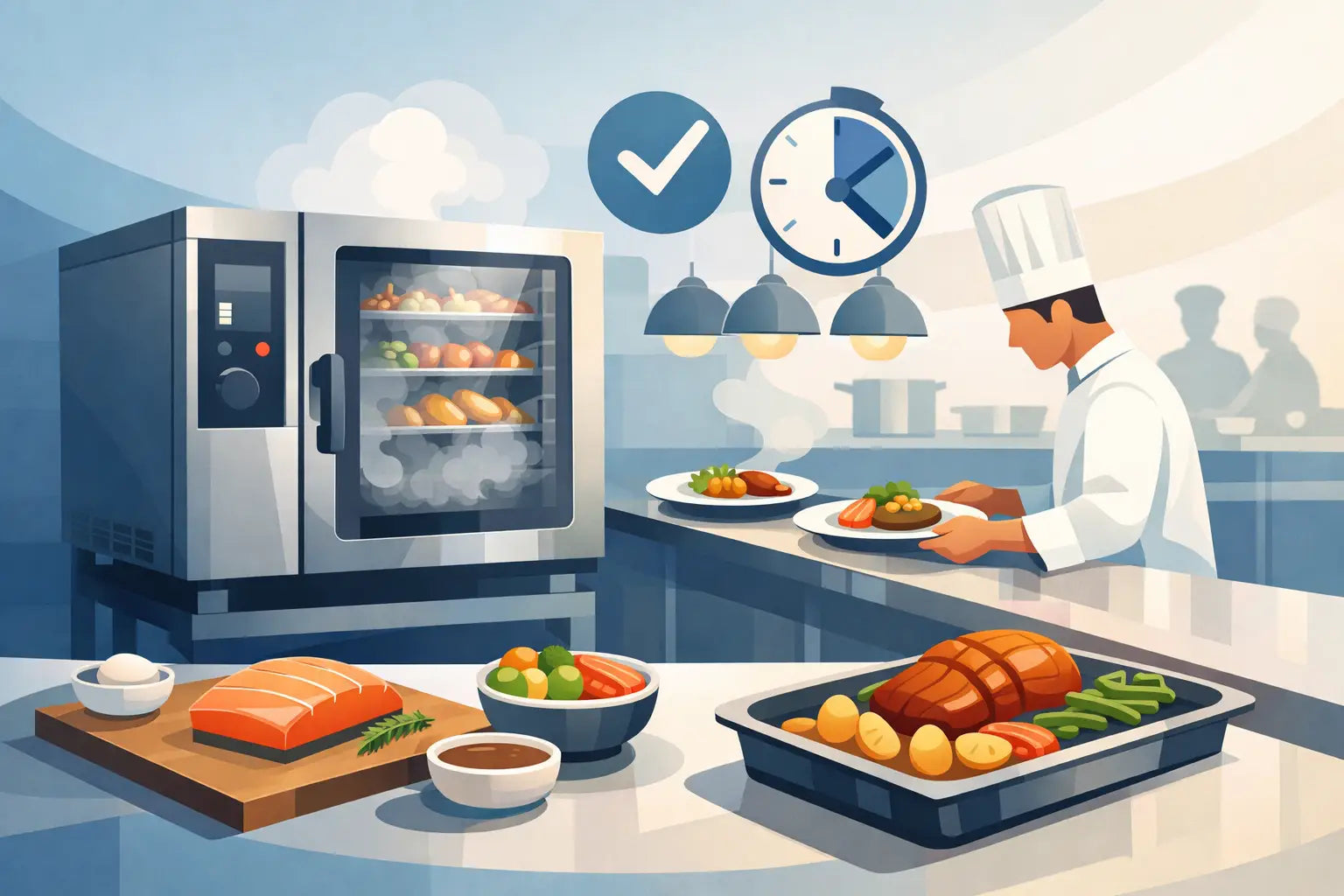
A combi oven combines three primary modes: dry convection heat, steam, and a combination of heat plus humidity. Fans circulate air around the cabinet, while steam introduces moisture when the food or process needs it. The result is a cooking environment that can be adjusted with far more precision than a conventional convection oven.
Dry heat is the setting for browning, roasting, baking, and finishing. Steam handles delicate vegetables, shellfish, grains, eggs, and gentle reheating. Combination mode is where many commercial kitchens find their daily advantage. Humidity protects a roast or poultry item from excessive moisture loss while circulating heat cooks it evenly, producing a better finished yield and a more forgiving service window.
That does not mean every item benefits from humidity. A crisp-skinned chicken, a crackling pork belly, or a tray of pastries may need a dry finish to develop the surface customers expect. A combi oven does not remove the need for culinary judgment. It gives that judgment more range.
Start With the Product, Not the Program
The most useful way to approach combi oven cooking is to begin with the finished result. Ask what the food should feel and look like at pickup: moist and tender, deeply browned, gently set, crisp at the edges, or ready to hold for a banquet line. Then build the cooking environment around that target.
A whole chicken is a clear example. Start with combination heat to cook the bird evenly while limiting moisture loss. As the internal temperature approaches the desired point, reduce humidity or switch to dry convection to tighten and color the skin. The exact temperature, fan speed, and humidity percentage will vary by oven, bird size, seasoning, and whether the chicken is going straight to the pass or into a hot holding period.
Vegetables require a different mindset. Steam preserves their natural color and clean flavor, but it can also leave them wet if pans are crowded or if they sit too long after cooking. For service, many operators steam in batches, then finish quickly in a saute pan, on a charbroiler, or with high dry heat in the combi. This creates a better contrast of tender interior, seasoned surface, and fresh visual appeal.
Baking is equally dependent on the desired finish. Steam introduced early in a bread bake supports oven spring and crust development. Too much humidity for too long, though, can soften the crust and slow browning. A disciplined recipe should define not only temperature and time, but also when steam enters the cabinet and when it is vented away.
Use Core Temperature to Protect Quality
Time is useful. Core temperature is more reliable.
Commercial combi ovens equipped with a probe allow cooks to target doneness at the center of the product instead of relying on a fixed number of minutes. This matters with proteins, where thickness, starting temperature, batch size, and pan load can all change the cook. It also matters when labor is stretched. A probe-driven program can reduce the risk of a roast passing its ideal point because someone was pulled to the line.
For proteins cooked for immediate service, use the probe to establish a repeatable finish temperature, then account for carryover cooking during resting. For cook-chill production, program to the food safety and quality standards appropriate to your operation, then move product promptly through the next stage of the process. A combi oven is excellent at controlled production, but it does not replace disciplined cooling, labeling, storage, and reheating procedures.
The probe also supports consistency across shifts. Once a chef has developed a process that delivers the right texture and yield, that program becomes a shared operational standard rather than knowledge held by one experienced cook.
Pan Load, Airflow, and the Details That Matter
A combi oven performs best when its airflow is respected. Overloaded shelves, tightly packed hotel pans, and products piled on top of one another create uneven cooking zones. The cabinet may be set precisely, but blocked air circulation will still produce uneven browning and inconsistent internal temperatures.
Leave enough space for air to move around pans. Use perforated pans for steaming items that need drainage, such as vegetables or dumplings. Use solid pans for braises, custards, and dishes that require their cooking liquid. For roasted proteins, racks can improve circulation and allow rendered fat to fall away, while a pan beneath keeps the cabinet cleaner.
The same principle applies to sheet-pan work. Cookies, pastries, and roasted vegetables need room between pieces if the goal is even color. If volume requires a full load, test the product on every rack position before putting the program into regular production. Fan-driven heat is powerful, but it is not magic.
Water quality deserves equal attention. Steam production depends on the water feeding the oven, and mineral-heavy water can lead to scale buildup, reduced performance, and premature service needs. Follow the manufacturer’s filtration requirements, keep up with scheduled cleaning, and use the recommended detergents. A clean cooking chamber is part of flavor control, not merely maintenance.
Where Combination Cooking Earns Its Footprint
The strongest case for a combi oven is not that it can replace every piece of equipment. A charbroiler still creates direct-fire character. A pizza oven still delivers the radiant heat and floor bake needed for a distinct crust. A fryer produces a texture no humid cabinet should imitate.
What the combi does exceptionally well is take pressure off the rest of the kitchen. It can handle batch-roasted proteins, steamed sides, breakfast egg production, bakery work, banquet retherming, and controlled overnight cooking without forcing cooks to manage multiple ovens and steamers. In a compact kitchen, that flexibility can reshape the line. In a high-volume operation, it can turn prep into a calmer, more repeatable system.
Caterers and hospitality teams often benefit from its ability to reheat plated or bulk-prepared food with less drying. A thoughtful humidity setting can bring starches, vegetables, and proteins back to serving temperature more evenly than dry heat alone. The trade-off is that some items need a separate crisping step, particularly fried foods, delicate crusts, and anything meant to have a dry exterior.
Build Programs Through Testing, Not Assumption
Programmable combi ovens can store recipes and multi-step cooking sequences, but a saved program is only as good as the testing behind it. Start with a small set of high-impact menu items: a signature roasted protein, a vegetable side, a breakfast item, a baked good, and a retherm process. Test each under actual pan loads and typical service conditions.
Record the settings, pan type, product weight, starting temperature, probe target, rest time, and finished yield. Taste the product after it has held for the realistic amount of time it may wait before pickup. That last step separates a technically correct cook from a service-ready one.
Once the program is established, name it clearly and train the team on loading, probe placement, and finishing steps. “Chicken” is not a useful program name if one version is for immediate service and another is for chilled banquet production. Clear language prevents expensive mistakes.
Choosing the Right Cabinet for Your Kitchen
Capacity and utilities should guide the purchase as much as cooking ambition. A countertop unit may suit a compact cafe, prep kitchen, or serious residential setup, while a full-size floor model can support hotel banquets, institutional production, and busy restaurants. Consider the number and size of pans you use, available electrical or gas service, water supply, drainage, hood requirements, door clearance, and the physical route into the building.
Also consider the menu’s true demands. If the oven will primarily roast, bake, and retherm, a straightforward model with dependable controls may be the right fit. If your team needs advanced programs, automated cleaning, multiple probes, and tightly managed cook-chill workflows, greater capability may return its cost through labor savings and reduced waste. Culinary Precisions helps operators evaluate equipment around the production reality, not just the appeal of additional features.
The best combi oven setup gives the kitchen a dependable center of gravity: heat where it is needed, moisture when it matters, and repeatable results when the doors open for service.