Blast Freezer Review Guide for Serious Kitchens
A blast freezer earns its place when your kitchen needs to protect quality after the cooking stops. This blast freezer review guide focuses on the factors that affect real service: how quickly a unit pulls heat from food, how much product it can handle, where it fits, and whether it supports the way your team actually works. For restaurants, bakeries, caterers, meal-prep operations, and serious home cooks, the right machine is not simply a bigger freezer. It is a precision tool for safer storage, more consistent production, and stronger control over waste.
What a Blast Freezer Should Deliver
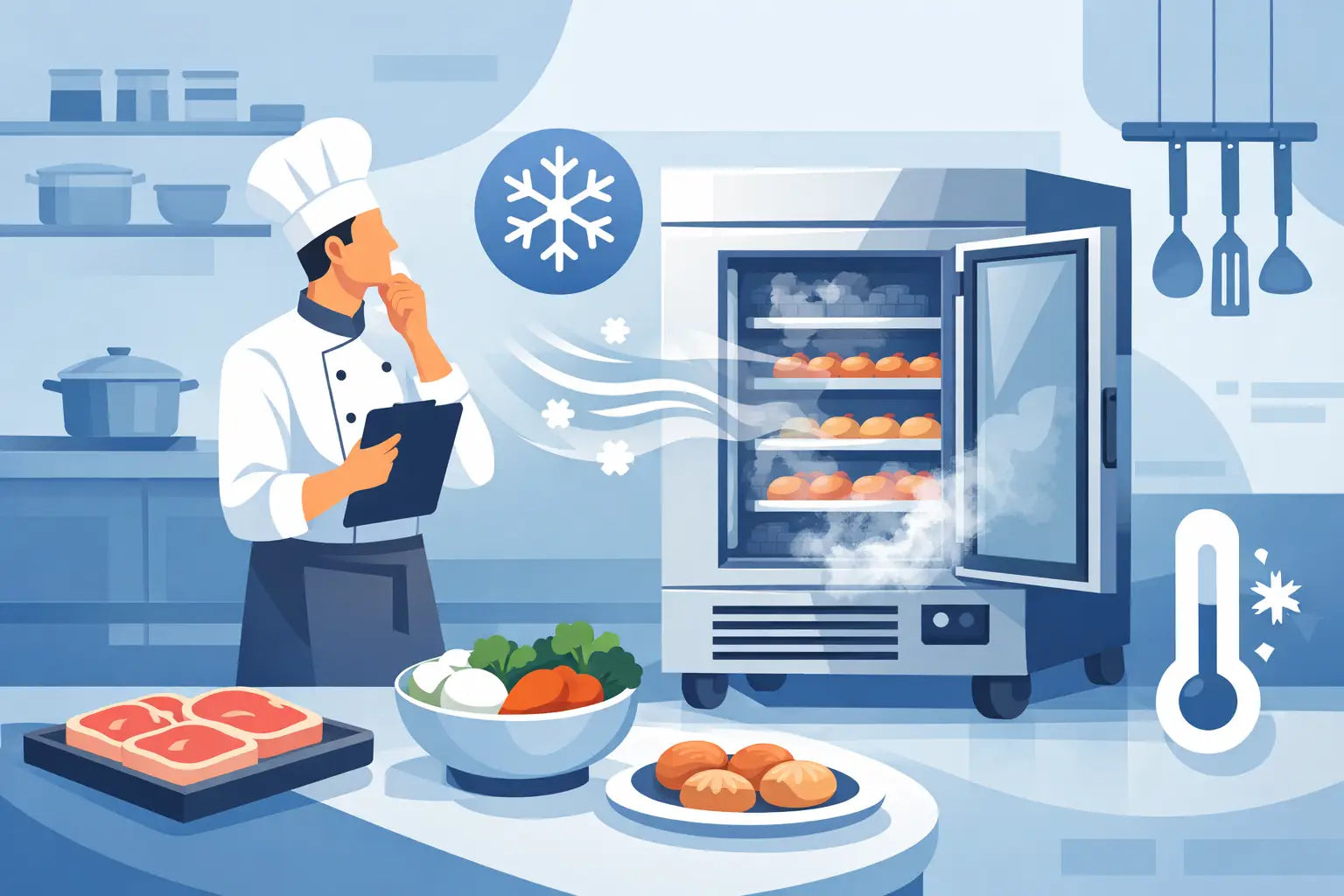
A conventional freezer is designed to hold food at a frozen temperature. A blast freezer is designed to move freshly cooked or chilled food through the temperature danger zone at speed, using high-velocity cold air and controlled cycles. That distinction matters when you are portioning sauces, cooling braises, freezing pastry, preparing proteins ahead of service, or building inventory for an event.
Fast freezing creates smaller ice crystals than slow freezing. In practical terms, that can mean better texture when food is thawed or reheated. Delicate fish is less likely to turn watery, vegetables hold their structure more effectively, and prepared components retain a more professional finish. The food-safety benefit is equally significant: rapid cooling helps operators manage time and temperature with more discipline.
Do not assume every model delivers the same result. The best choice depends on the product you load, the pan format you use, your daily volume, and the ambient conditions around the equipment. A compact countertop unit may be an excellent fit for a small pastry program, while a busy commissary may need a roll-in model built around rack-level production.
Blast Freezer Review Guide: Start With Your Production Load
Capacity claims can be misleading if you only look at cubic feet or the number of shelves. A useful review starts with the amount of hot product the unit can safely chill or freeze in a single cycle. Manufacturers commonly provide separate ratings for blast chilling and hard freezing, and those numbers should be compared against your actual batch sizes.
Ask what a typical production day looks like. If your team produces twelve sheet pans of baked goods at once, a cabinet that holds only five pans creates a bottleneck, even if its internal storage volume appears generous. If you cook proteins in hotel pans, confirm both pan dimensions and rail spacing. If you freeze soups, stocks, or sauces, account for container depth. Dense products cool more slowly than shallow, evenly spread portions.
For most operations, it is smarter to buy around the heaviest normal production period rather than the average day. A unit that runs at full capacity during every prep shift can slow the kitchen and leave little room for growth. However, oversized equipment also brings higher purchase costs, electrical demands, and floor-space requirements. The goal is usable capacity, not maximum capacity on paper.
Pan Configuration and Cabinet Access
Reach-in blast freezers work well when staff need quick access to individual pans and moderate batches. Roll-in models make more sense for high-volume operations that already use bakery racks or mobile pan racks. The advantage is labor efficiency: load the rack once, roll it into the cabinet, and remove it when the cycle is complete.
Door swing deserves attention too. Measure the clearance needed to open the door fully, move a rack, and allow staff to pass safely. In a narrow prep room, a poorly positioned door can become a daily frustration. Reversible doors are useful in some layouts, but only if the model is designed for field conversion.
Cooling Performance Is More Than a Temperature Number
A blast freezer review should look beyond the lowest temperature shown in a specification table. Low cabinet temperature helps, but air movement, compressor performance, probe accuracy, insulation, and the unit's ability to recover after loading warm food all affect results.
Look for clear cycle specifications that describe how quickly the equipment chills food to refrigeration temperatures and freezes food to a solid core. Core temperature is the meaningful measurement, not simply the air temperature inside the cabinet. Units with a food probe can end a cycle based on the product's actual internal temperature, reducing guesswork and helping protect sensitive items from overprocessing.
Programmable controls are especially valuable for kitchens with multiple users. A chef can establish repeatable cycles for custards, sauces, dough, cooked proteins, or plated components, then give the team a consistent process to follow. Basic manual controls may be sufficient for a small operation with one trained operator, but they provide less protection against inconsistent loading and timing.
The surrounding environment also matters. A blast freezer working beside a hot line, under poor ventilation, or in a warm bakery will face a heavier workload than the same model in a cool prep room. Check the stated operating ambient range and give the unit the required ventilation clearance. Ignoring those requirements can reduce performance, increase energy use, and put unnecessary strain on the refrigeration system.
Evaluate Construction for Daily Kitchen Pressure
Commercial blast freezers should be judged as working equipment, not showroom equipment. Stainless steel construction, durable hinges, secure door gaskets, corrosion-resistant interiors, and easily removable pan supports all contribute to a machine that can stand up to repeated cycles and routine cleaning.
Pay particular attention to the evaporator area and drainage design. Blast chilling produces moisture, and a unit that is difficult to clean or drain can quickly become a sanitation burden. Accessible filters, smooth interior surfaces, rounded cabinet corners, and a clear defrost strategy reduce downtime for the team responsible for maintenance.
Consider serviceability before the equipment arrives. Ask whether key components can be accessed from the front or side, whether replacement probes and gaskets are readily available, and whether local service support can work on the refrigeration system. Reliability is not only about avoiding failure. It is also about recovering quickly if a component eventually needs attention.
Installation Requirements Can Decide the Purchase
The most capable blast freezer is the wrong purchase if your site cannot support it. Before comparing models, verify the available footprint, doorway widths, electrical service, drainage requirements, ventilation space, and floor capacity for larger units.
Electrical requirements vary substantially. Some smaller machines operate on common power configurations, while larger commercial cabinets may require higher-voltage service or dedicated circuits. Confirm the exact electrical specification for the model you are considering and involve a qualified installer before delivery. Do not plan around assumptions based on another freezer or refrigerator in the building.
Water and drain connections depend on the equipment design and local code. Some units require a drain to manage condensate and defrost water; others may use an evaporative system. Either way, installation should leave room for cleaning and service access. A tight, inaccessible installation can turn simple maintenance into a costly disruption.
For serious home cooks, the same discipline applies. A residential kitchen may not have the electrical capacity, clearance, or ventilation for a commercial cabinet. A smaller professional-grade unit may deliver the control you want without forcing a major remodel.
Compare Features That Change Workflow
Not every premium feature has equal value. Prioritize features that improve repeatability, traceability, labor efficiency, or food quality in your specific operation.
The following capabilities are worth comparing when they match your workflow:
- Core probes and automatic cycle completion for temperature-driven control.
- Programmable recipes for repeatable results across products and shifts.
- USB or digital data logging when HACCP records and process verification matter.
- Roll-in rack compatibility for high-volume baking, catering, and commissary production.
- Adjustable rails and pan supports for mixed hotel pans, sheet pans, and containers.
How to Judge Value Beyond the Purchase Price
A lower-priced blast freezer is not automatically the better value if it slows production, cannot handle your pan format, or struggles in your kitchen environment. The real cost includes installation, energy use, cleaning time, maintenance, labor, product loss, and the consequences of inconsistent quality.
Consider the financial impact of better batch control. If rapid chilling lets you produce sauces in larger runs, preserve more trim, extend the usable life of prepared components, or reduce last-minute prep, the equipment can support measurable operational gains. For bakeries, preserving texture and freezing products at the right point in the process can improve consistency across every bake and delivery.
Review warranty terms carefully, but do not stop there. Understand what the warranty covers, who performs service, and how quickly parts can be obtained. Equipment built for performance should also be supported with a practical plan for keeping it productive.
The strongest buying decision comes from matching the blast freezer to your menu, peak load, staff habits, and available infrastructure. Culinary Precisions helps performance-focused buyers evaluate equipment with those operational realities in mind. Choose a unit that gives your kitchen room to produce ahead with confidence, protect the standards guests expect, and stay ready when the next rush arrives.