Food Warming Equipment That Holds Quality
The rush is underway, tickets are stacking up, and the food that left the line perfectly plated 10 minutes ago now has to perform just as well for the next guest. That is where food warming equipment earns its place in a serious kitchen. The right holding setup protects safe temperatures while preserving the texture, moisture, and appearance that define a quality service.
Food warmers are not simply appliances that keep food hot. They are production tools that create breathing room between cooking and serving. For restaurants, catering operations, cafeterias, concession stands, and high-volume home kitchens, the right equipment can reduce waste, improve ticket flow, and help every plate meet the same standard.
What Food Warming Equipment Is Designed to Do
Food warming equipment is built to hold fully cooked food at safe serving temperatures until it is needed. It supports consistency during peak periods by allowing operators to prepare in batches without sacrificing every item to the timing of a single order.
The distinction between holding and cooking matters. A warmer is not a substitute for a range, oven, or steamer, and it should not be used to bring cold food up to temperature. In most commercial settings, hot food must be held at 135°F or above, although local health codes may have additional requirements. Food should be properly cooked and reheated before it enters a holding unit, then checked with a calibrated thermometer throughout service.
When properly matched to the menu, a warming unit helps protect the work already done by the kitchen. It keeps sauces ready for plating, proteins available for service, sides moving through a buffet line, and packaged meals warm for pickup or delivery. The goal is not merely heat. The goal is controlled heat that respects the food.
Types of Food Warming Equipment for Different Menus
The best choice depends on what you serve, how long it must hold, and how quickly it turns over. A busy carving station has different needs than a quick-service counter holding soups, and neither needs the same solution as a catering team transporting prepared pans.
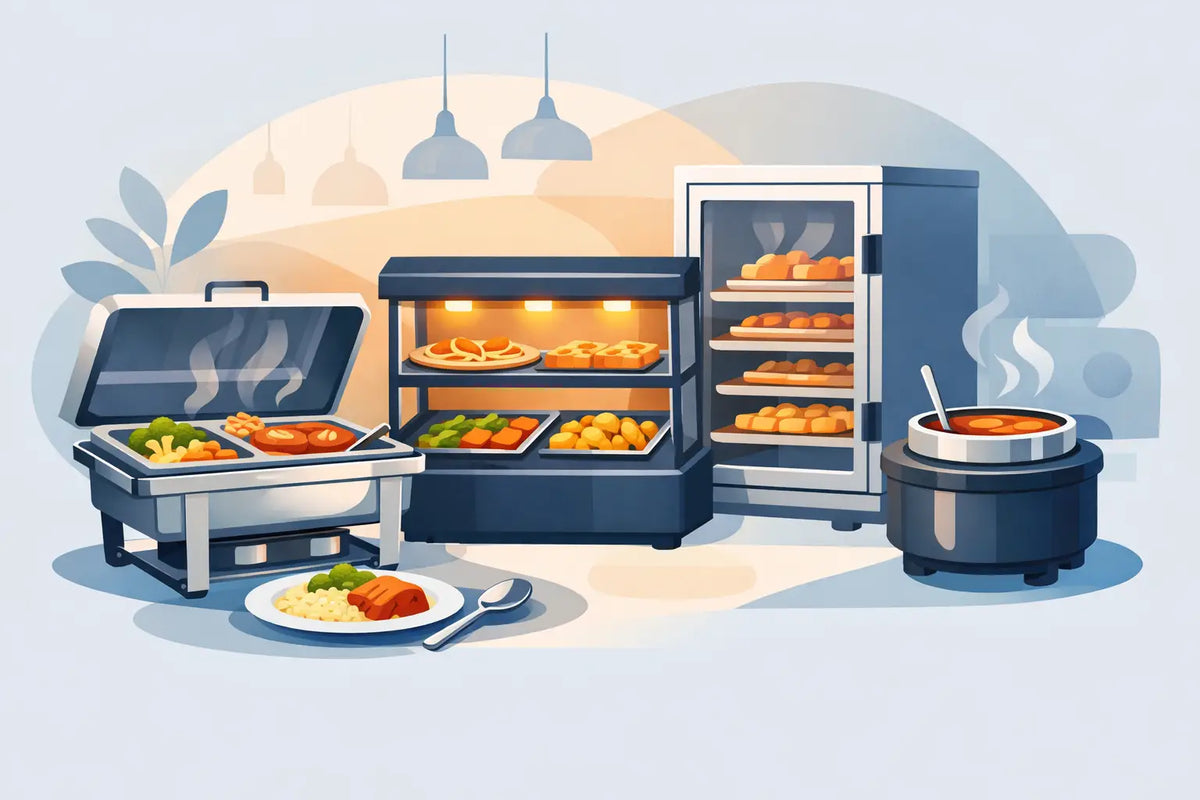
Steam Tables and Bain-Marie Units
Steam tables use water or steam heat to warm food pans gently and evenly. They are a dependable option for moist foods such as mashed potatoes, rice, vegetables, sauces, chili, pasta, and braised proteins. Because the heat is humid, steam tables can reduce surface drying during service.
They are especially practical for cafeterias, buffet service, catering lines, and operations that hold multiple menu items in standard food pans. Water-based models require attention to water levels and cleaning, while dry well models simplify operation for some kitchens. The trade-off is that prolonged holding can still soften crisp foods or overcook delicate items, even with excellent temperature control.
Countertop Warmers
Countertop warmers are compact, efficient, and well suited to limited prep areas. They can hold soup, queso, sauces, toppings, and smaller batches of prepared food close to the service line. For coffee shops, concession counters, food trucks, and compact restaurant kitchens, this footprint can make a meaningful difference.
Capacity is the key consideration. A countertop unit may be ideal for supporting a focused menu, but it may create bottlenecks if it becomes the primary holding station during a heavy rush. Choose pan capacity based on your busiest realistic service period, not the slowest part of the day.
Heated Holding Cabinets
Heated holding cabinets provide enclosed, controlled storage for trays, pans, and prepared components. They are a strong fit for banquet service, catering, hotel operations, takeout programs, and kitchens that need to stage large quantities of food before final plating.
An enclosed cabinet protects food from airborne contaminants and drafts while helping operators organize production. Models with humidity control offer an advantage for items that need moisture retention, such as roasted meats, rice, and covered pans. Dry heat cabinets may better suit products that would become soggy in a humid environment. The right environment depends on the product, not simply the cabinet size.
Heat Lamps and Heated Shelves
Heat lamps and heated shelves are designed for short-term holding at the pass, pickup counter, or expo station. They keep plated meals, fries, sandwiches, and other finished items warm while an order is assembled. Their value comes from speed and access: staff can grab the item immediately without opening a door or moving a pan.
These units should be treated as a final-service tool, not long-term storage. Direct radiant heat can dry food quickly, especially lean proteins, fried items, and uncovered sides. Use them for short windows, monitor quality closely, and position food so the heat reaches it evenly.
How to Choose Food Warming Equipment for Your Operation
Start with your menu and service pattern. Ask what foods need to be held, how long each item remains in the unit, and whether that food benefits from moisture, dry heat, or only a brief period under a lamp. A warmer that performs well with gravy and braised beef may be the wrong choice for crisp chicken or freshly fried potatoes.
Next, calculate capacity with actual pan sizes and production volume. A unit that holds six full-size pans may sound sufficient, but the available space changes quickly when you use different pan depths, lids, dividers, or smaller inserts. Deep pans hold more product but can make fast access and quick replenishment harder. Shallow pans support faster turnover and easier portioning, though they require more frequent refilling.
Your available utilities also shape the decision. Verify electrical voltage, amperage, plug type, and the number of circuits available before selecting an electric warmer. Gas equipment may make sense in certain commercial kitchens, but it requires appropriate ventilation, installation, and compliance planning. Measure the equipment location carefully, including door swing, counter clearance, and the aisle space staff need to work safely.
Controls deserve close attention. Adjustable thermostatic controls help staff respond to the needs of different foods, while clear temperature displays simplify daily checks. For operations with multiple shifts or varying staff experience, straightforward controls reduce guesswork. Precision is useful only when the team can operate the equipment consistently.
Finally, consider construction and cleaning. Stainless steel exteriors, durable wells, accessible drain systems, removable components, and smooth surfaces help reduce maintenance time. In commercial foodservice, select equipment that meets the sanitation and certification requirements applicable to your operation. A lower initial price is rarely a savings if the equipment is difficult to clean, unreliable during peak service, or unable to support your volume.
Protecting Food Quality During Holding
Even the best warmer cannot correct poor holding practices. Build a system around fresh batches, proper covering, temperature checks, and realistic hold times. Label prepared food with the time it entered the warmer so staff can rotate product confidently and avoid serving food that has lost its intended quality.
Moisture management is often the deciding factor. Covered pans help retain heat and reduce drying for many foods, but trapped steam can weaken crusts and make fried items limp. Crisp foods often benefit from shorter holding periods, ventilated packaging, or dry heat designed for that application. Sauces, soups, and gravies should be stirred periodically to promote even temperature and prevent skinning or scorching around the edges.
Avoid overloading wells and cabinets. Packing food too tightly can restrict air circulation and lead to uneven temperatures. Leave enough room for heat to move around pans, and do not assume the control setting reflects the temperature at the center of the food. A thermometer provides the answer that matters.
Common Buying Mistakes to Avoid
The most common mistake is buying for capacity alone. A large warmer is valuable only if its heat style, control range, and layout suit the menu. Another is using holding equipment to compensate for weak production timing. If food sits too long before service, quality drops regardless of the equipment used.
Operators also sometimes overlook placement. A holding cabinet located too far from the line can add steps and slow service. A countertop warmer placed in an overcrowded prep area can create safety issues. Plan the equipment around the movement of food and people, from cooking to holding to plating or pickup.
Food warming equipment should give your kitchen control when service becomes demanding. Choose the unit that fits your menu, volume, and workflow, then use it with disciplined temperature checks and smart batch management. The result is food that reaches the guest with the same confidence it had when it left the cookline.