Choosing a Slushy Machine for Restaurants
A rushed lunch service can expose weak equipment fast. If cold beverages are part of your menu, the right slushy machine for restaurants needs to do more than freeze product - it has to hold texture, recover quickly during peak demand, and stay easy to clean when the shift is over.
For restaurant operators, frozen drinks are rarely just a novelty item. They can raise ticket averages, support seasonal promotions, and create a high-margin category that works across quick-service, casual dining, bars, convenience concepts, and family-focused menus. But performance depends on choosing a machine that matches your volume, footprint, and workflow.
Why a slushy machine for restaurants can pay off
A commercial slushy machine earns its place when it supports both consistency and speed. Guests expect the same texture every time - not a drink that is too watery in the afternoon or too frozen to dispense during the dinner rush. A machine built for foodservice helps maintain that serving standard while reducing the manual effort of monitoring product throughout the day.
There is also a business case behind the equipment. Frozen beverages have broad appeal, especially in warm-weather markets, tourist-heavy areas, and family-oriented operations. They can work as standalone products, nonalcoholic specialty drinks, cocktail bases, or dessert-adjacent menu items. For some restaurants, a slushy program creates incremental revenue with minimal labor. For others, it becomes a signature offering that drives repeat orders.
The return depends on fit. A machine that is oversized for your store can waste space and product. One that is undersized may struggle to keep up, leading to slow service and inconsistent results when demand spikes.
What matters most when choosing a slushy machine for restaurants
The right purchase starts with operational realities, not just capacity numbers on a spec sheet. Restaurants need to think about how frozen beverages fit into service, storage, sanitation, and labor.
Bowl count and menu strategy
Single-bowl units are often a practical choice for smaller operations, limited-time offers, or businesses testing demand. They simplify product management and take up less counter space. If your goal is one high-volume flavor, this setup may be enough.
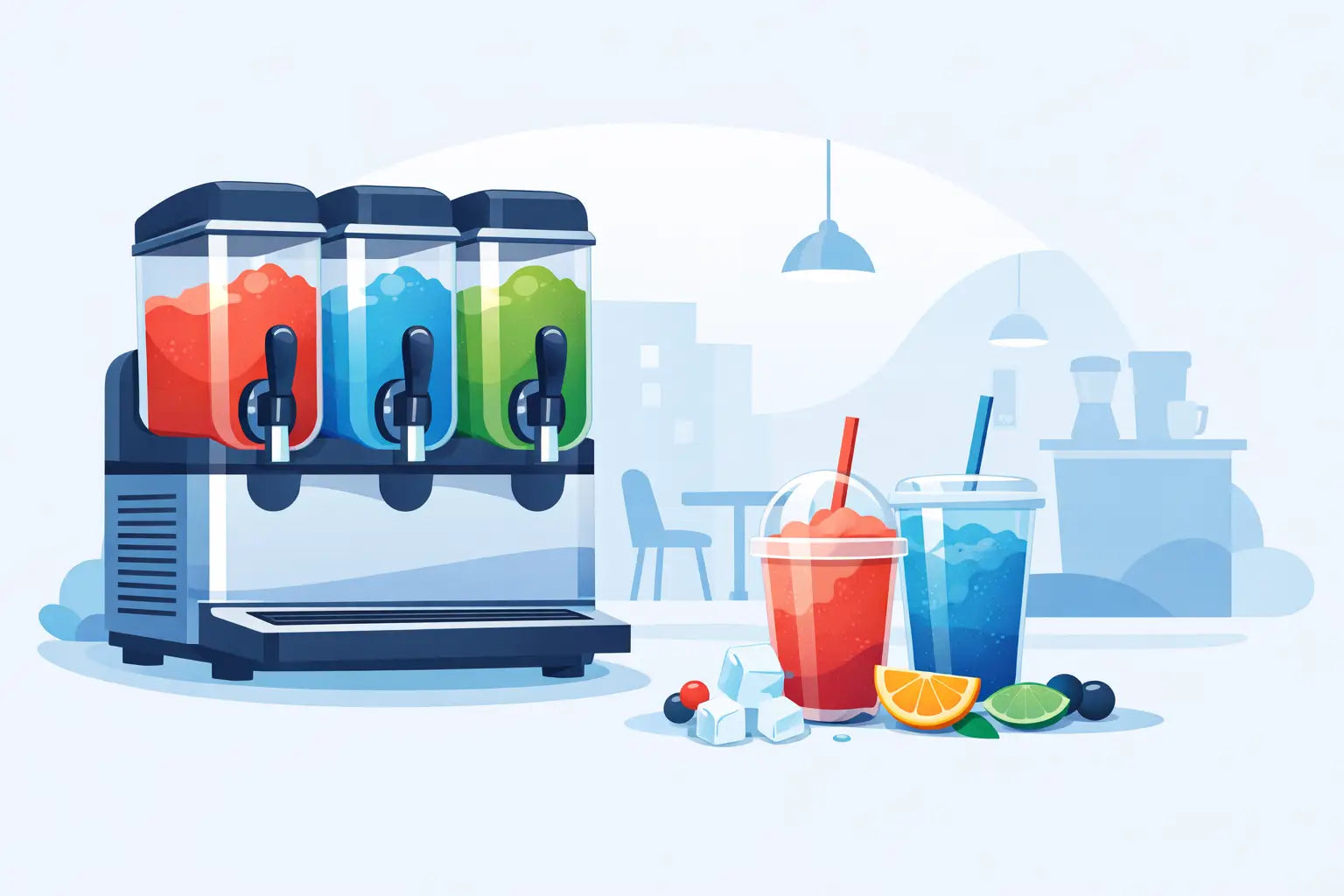
Two- and three-bowl machines offer more flexibility. That matters if you want to run multiple flavors, offer sugar-free or nonalcoholic options alongside standard mixes, or create layered beverage programs. More bowls can increase sales opportunities, but they also require more product planning, more cleaning time, and stronger daily discipline.
A common mistake is buying more flavor capacity than the menu can support. If one bowl sells well and the others move slowly, product quality can suffer. Frozen beverages perform best when turnover is steady.
Production capacity and recovery time
Capacity is not just about how much mix the machine holds. Recovery time matters just as much. During a lunch rush or event-driven service period, the machine needs to return product to proper texture after repeated dispensing.
Restaurants with steady all-day beverage traffic should prioritize units designed for commercial output rather than lighter-duty models. If your frozen drink sales come in sharp bursts, such as after school, late night, or weekend service, look closely at compressor strength and freezing performance. A machine that appears large enough on paper can still underperform if it recovers too slowly.
Footprint and placement
Counter space is expensive in any kitchen or front-of-house setup. Before selecting a machine, measure the full operating footprint, including clearance for ventilation, filling, drip areas, and staff access for cleaning.
Placement affects sales as well as workflow. A front-counter or self-serve-facing machine can encourage impulse purchases if your concept supports it. Back-bar or kitchen placement may make more sense for cocktail programs or made-to-order frozen beverages. Either way, access to power, airflow, and cleaning space should be considered early.
Ease of cleaning and sanitation
This is where long-term satisfaction is often won or lost. A slushy machine that looks impressive but takes too much time to break down and sanitize becomes a burden fast. Restaurants should look for components that are straightforward to remove, clean, and reassemble.
Food safety standards are not flexible, and sugary beverage products can create residue quickly. Machines with accessible bowls, simple controls, and service-friendly designs reduce the risk of inconsistent cleaning. That helps protect product quality and supports a more dependable daily close.
If your team has high turnover or multiple shift leads, simpler maintenance is usually the smarter investment. Precision matters, but usability matters too.
Key features worth paying for
Not every premium feature is essential for every operator. The best value comes from features that directly improve output, consistency, and labor efficiency.
Digital controls can help with temperature and texture management, especially in operations that want tighter control across shifts. Visual merchandising bowls matter when the machine is customer-facing and beverage presentation influences purchase decisions. Night mode or cooling mode can also be useful, depending on how long product remains in the machine and how your team handles overnight holding.
Durable dispensing components are another area worth attention. Handles, valves, seals, and gaskets see constant use. In high-volume environments, these parts affect both user experience and long-term maintenance costs.
Noise level may also matter more than some buyers expect. In a bar, cafe, or open counter environment, an overly loud machine can become part of the guest experience for the wrong reason.
Matching the machine to the concept
Different restaurant models need different equipment priorities. A quick-service restaurant may care most about speed, visibility, and simple operation. A bar may focus on texture precision, multiple flavors, and frozen cocktail performance. A family restaurant may want a machine that supports kid-friendly beverages with minimal training requirements.
For concession-style concepts, amusement venues, and high-traffic seasonal businesses, output and recovery time often outweigh almost everything else. For smaller cafes or hybrid foodservice spaces, footprint and menu versatility may be the deciding factors.
This is where experienced buyers separate wants from needs. The best machine is not necessarily the largest or most feature-heavy. It is the one that fits your sales pattern, your staff capability, and your service model with the least friction.
Operating costs and the real value equation
Purchase price is only one part of the decision. Energy use, cleaning labor, replacement parts, and product waste all affect total cost over time.
A lower-cost machine may seem attractive initially, but if it requires more intervention, struggles in hot conditions, or wears out quickly under daily demand, the savings disappear. A better-built commercial unit can deliver stronger value through consistent operation and fewer service interruptions.
Product waste deserves special attention. When a machine has poor temperature control or slow turnover in oversized bowls, texture degrades and mix may need to be discarded. That cuts directly into margin. Choosing a properly sized unit helps protect profitability more than many operators realize.
Questions to ask before you buy
Before committing to a machine, restaurant owners and foodservice managers should pressure-test the decision against actual use. How many frozen beverages do you expect to sell per hour during peak times? Will the machine be guest-facing or staff-operated? Are you offering one core flavor or multiple rotating options? How much daily cleaning time can your team realistically support?
It is also worth asking who will service the machine if needed and how easy routine parts replacement will be. Reliability is not only about how a machine performs on day one. It is about how well it holds up through repeated use, regular sanitation, and busy service windows.
A trusted equipment partner can help narrow the field based on volume, application, and space constraints. For operators who want commercial-grade performance without guesswork, that guidance can be as valuable as the equipment itself.
A smart buy supports more than beverage sales
A slushy machine is not just another countertop add-on. In the right operation, it strengthens speed of service, product consistency, and menu profitability all at once. That is why serious buyers look beyond color, novelty, or short-term pricing and focus on performance under real restaurant conditions.
Whether you are adding frozen lemonades to a summer menu, building out a cocktail program, or creating a grab-and-go beverage station, the best results come from equipment selected with precision. Culinary Precisions serves operators who expect that level of performance - because in a professional kitchen, every machine should earn its space.
Choose the unit that matches your volume, your staff, and your standards, and it will do more than dispense drinks. It will help your operation run sharper when demand is highest.