Best Commercial Ice Cream Machines for 2026
A busy dessert station does not have time for a machine that freezes too slowly, dispenses inconsistently, or turns cleaning into the last shift’s biggest problem. The best commercial ice cream machines are not defined by one feature or one price point. They are the machines that match your service model, product style, production volume, and available utilities with dependable daily performance.
For a quick-service counter, that may mean a high-output soft serve unit capable of keeping pace through a lunch rush. For a restaurant building a signature dessert program, a batch freezer may deliver the texture, ingredient control, and premium presentation the menu demands. The right choice starts with what you plan to serve, then moves into capacity, footprint, cleaning requirements, and long-term operating discipline.
Best Commercial Ice Cream Machines Start With Your Menu
Commercial ice cream equipment falls into several distinct categories. Each produces a different result and supports a different workflow. Buying the wrong type can leave an operation with unnecessary labor, limited menu flexibility, or capacity that falls short when demand peaks.
Soft serve machines for fast, repeatable service
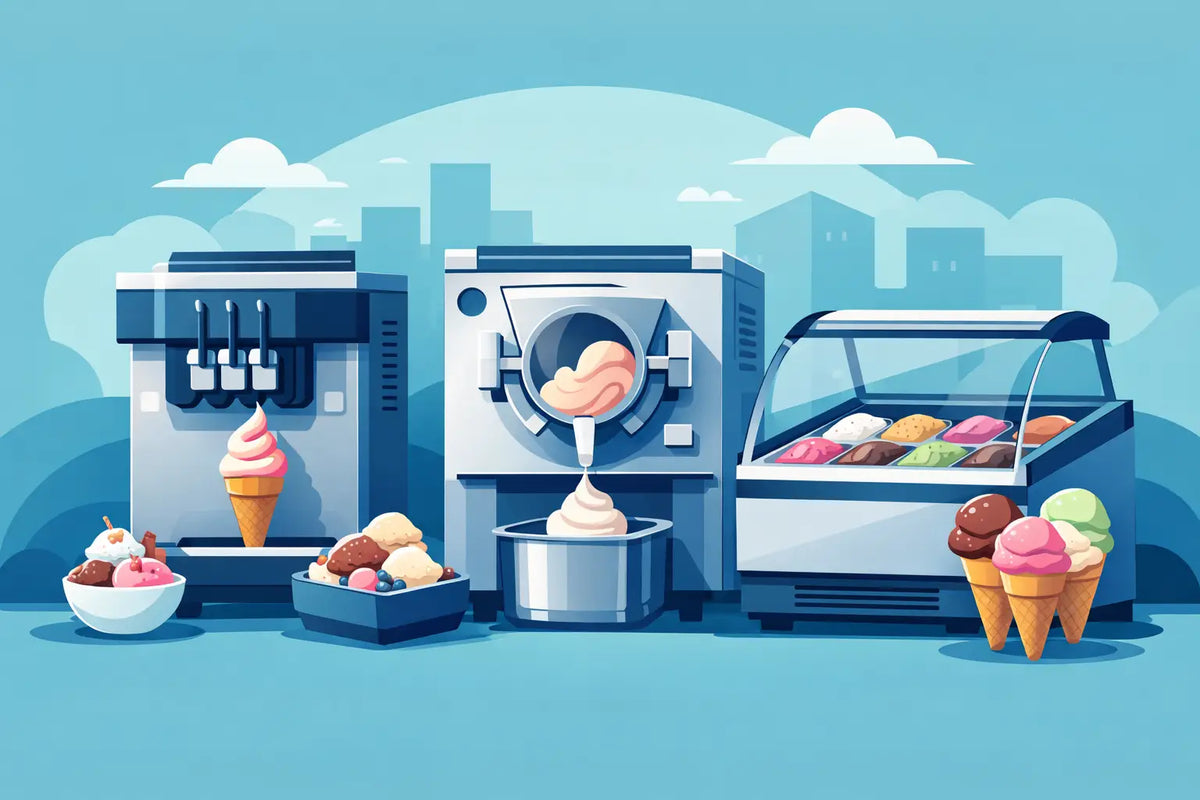
Soft serve machines are built for speed. They hold and freeze a prepared mix while dispensing a smooth, aerated product directly into cones, cups, shakes, sundaes, and frozen beverages. They are a natural fit for ice cream shops, concession stands, family entertainment venues, cafeterias, convenience stores, and restaurants with high dessert volume.
A single-flavor unit is often the practical choice for a focused menu or limited counter space. Twin-flavor machines with a twist option support more variety and can raise average ticket value, but they require more space, more mix management, and more attention during cleaning. Floor models generally provide greater hopper and freezing-cylinder capacity, while countertop models suit lower-volume programs and tight service lines.
Soft serve quality depends on more than dispensing speed. Look for stable temperature control, a refrigeration system designed for recovery during rush periods, and a beater system that maintains a smooth, consistent draw. If the product comes out too soft, too icy, or inconsistent from one serving to the next, the guest notices immediately.
Batch freezers for premium hard ice cream and gelato
Batch freezers are the choice for operators producing artisan ice cream, gelato, custard-style bases, sorbet, and custom seasonal flavors. Rather than holding a continuous supply of mix for dispensing, these machines freeze a measured batch at a time. That gives chefs more control over overrun, texture, mix-ins, and finished product density.
This control matters when the menu depends on a richer, more deliberate product. A batch freezer can support flavors with fruit purees, chocolate, nuts, cookie pieces, and other inclusions that may not work well in every soft serve system. It also gives the kitchen freedom to develop a product with a specific mouthfeel rather than relying on a standard mix format.
The trade-off is workflow. Batch production requires planning, trained staff, freezer storage, and often a separate hardening process before service. It is not the simplest path for a counter that needs to dispense hundreds of servings with minimal labor. It is, however, a strong investment for a chef-driven program where product differentiation matters.
Specialty frozen dessert equipment
Not every frozen menu calls for conventional ice cream. Frozen yogurt, Italian ice, sorbet, custard, slush, and milkshakes may require different machine capabilities or mix formulas. Before comparing specifications, define exactly what your operation will sell. A machine marketed for frozen desserts may be excellent for one application and poorly suited to another.
This is especially relevant for operators planning a mixed menu. A soft serve machine can create a strong base for cones and shakes, but it may not replace a dedicated slushy machine for frozen cocktails or flavored beverages. Equipment should support the menu you want to execute at full volume, not simply the first product you plan to test.
Capacity Is More Than Servings Per Hour
Published output is useful, but it should not be read in isolation. Your real capacity depends on the machine’s recovery rate, hopper size, cylinder size, product viscosity, room temperature, staff habits, and the length of your rush. A unit can appear adequate on paper yet struggle if employees draw product continuously during the hottest, busiest part of the day.
Start by estimating peak demand rather than average daily sales. If you expect 200 servings over an eight-hour day but 80 of those servings sell between 6 p.m. and 8 p.m., size the machine for that two-hour window. A machine that recovers quickly protects product texture and keeps the line moving when it matters most.
Also consider how often staff will refill the hopper. Larger hoppers can reduce interruptions, but they take up more space and can increase product exposure if inventory turns slowly. Smaller operations may benefit from a compact machine with disciplined batch preparation rather than oversized capacity that sits underutilized.
Measure the Space, Utilities, and Service Access
A commercial ice cream machine is not just a countertop footprint. It needs clearance for airflow, access for cleaning, room for staff to load mix, and enough space for technicians to perform maintenance. Measure the installation location carefully, including doorways, counter depth, ceiling clearance for floor units, and the route from delivery to the final position.
Electrical requirements deserve the same attention. Some machines operate on standard 115V power, while higher-capacity models may require 208V or 220V service. Confirm voltage, amperage, plug configuration, and whether a dedicated circuit is needed before ordering. A high-performing machine cannot deliver its rated output if the electrical setup is inadequate.
Ventilation is another decision point. Air-cooled machines are common and convenient, but they release heat into the surrounding room. In a hot kitchen or enclosed service area, that heat can affect performance and make the space less comfortable. Water-cooled models can be more suitable in certain high-heat environments, though they introduce water-use and installation considerations.
Do not overlook drainage and sanitation access. Machines that require frequent disassembly should be placed where staff can clean components properly without disrupting the rest of the operation. Good placement supports both food safety and consistent machine performance.
Cleaning Time Is a Real Operating Cost
The most capable machine is only valuable if the team can maintain it correctly. Dairy-based products require disciplined cleaning and sanitizing because they create a food safety risk when residue, temperature abuse, or poor procedures are allowed to build up. Review the manufacturer’s cleaning schedule and make sure it fits your staffing model.
Some units are designed with features that simplify daily operation, such as refrigerated hoppers, automatic wash cycles, diagnostic displays, and accessible components. Those features can reduce labor and help staff identify issues early, but they do not eliminate the need for training. A written cleaning procedure, assigned responsibility, and regular inspection are essential.
Consider the cost of downtime as well. Easy-to-access wear parts, clear error notifications, and dependable support can matter more than a small difference in initial purchase price. A machine that is difficult to clean or service often becomes expensive after the sale.
Choose Features That Protect Product Quality
Performance features should connect directly to your menu and team. Digital controls can help operators manage consistency, but only if they are straightforward enough for busy staff to use correctly. Standby or night modes may help preserve mix and reduce energy use during slower hours. Refrigerated hoppers can support safer holding conditions and reduce the need for frequent product transfers.
For soft serve, pay close attention to draw quality, viscosity controls, and the machine’s ability to maintain texture during sustained demand. For batch freezers, evaluate batch size, freezing speed, scraper design, ingredient flexibility, and how easily the finished product can be removed and transferred for hardening.
A low-price machine may be appropriate for seasonal, low-volume use. For a daily commercial program, however, durability, recovery performance, sanitation design, and serviceability usually deserve priority. The equipment becomes part of your production system, not a countertop accessory.
A Practical Buying Standard for Commercial Operators
Before making a final decision, answer five operational questions: What frozen product will you serve? How many servings will you need during your busiest hour? How much counter or floor space can you dedicate? What electrical and ventilation infrastructure is available? Who will clean and maintain the machine every day?
Those answers will narrow the field faster than comparing features line by line. A high-volume soft serve shop should prioritize recovery, hopper capacity, and simple cleaning. A chef-led restaurant may place greater value on batch control and recipe flexibility. A serious home cook may need commercial-grade construction in a more compact format, while still confirming that household power and ventilation can support the machine.
Culinary Precisions helps operators evaluate performance-driven equipment with the same standard used in professional kitchens: choose the machine that can deliver consistent results under real service conditions. Select for the rush, train for sanitation, and give the machine the space and utilities it needs to perform. That is how a frozen dessert program earns repeat orders instead of creating avoidable bottlenecks.