How to Choose Pizza Ovens That Perform
Friday at 6:30 p.m. is a poor time to learn your oven cannot keep up. If your crust color swings from pale to scorched, recovery time drags, or your line backs up after a small rush, the issue is rarely the dough alone. Pizza ovens shape speed, consistency, labor flow, and the standard your kitchen can hold every night.
For restaurant operators, that means throughput and ticket times. For serious home cooks, it means whether your setup can deliver the same blistered crust and balanced bake you expect from a professional kitchen. The right oven is not simply the hottest model on the market. It is the one built around your volume, your menu, your space, and the kind of control you need under pressure.
What pizza ovens actually change in service
A pizza program lives or dies on repeatability. You need top heat to brown cheese properly, floor heat to set the base, and enough retained or recovered heat to send the next pie without a drop in quality. When those elements are out of balance, your team starts compensating. They rotate too often, extend bake times, or alter dough handling to work around equipment limitations. That is where consistency starts to slip.
Good pizza ovens tighten the process. They shorten the gap between pies, stabilize baking conditions, and reduce the guesswork that leads to waste. In a commercial setting, that translates into more predictable output and less strain during peak periods. In a home setting, it means you spend more time refining your dough and toppings instead of fighting uneven heat.
Start with the style of pizza you want to serve
Before comparing specs, define the product. A New York-style pie, a high-hydration Neapolitan pizza, a tavern-style thin crust, and a pan pizza do not ask the same thing from an oven. This is where many buyers get off track. They shop by headline temperature or aesthetics instead of matching oven behavior to the bake they want.
If your focus is fast, high-heat baking with strong leopard spotting and a soft, airy rim, you need an oven that can reach and sustain very high temperatures with responsive top heat. If your menu leans toward thicker crusts, heavier topping loads, or longer bake formats, balanced chamber heat and steady floor performance matter more than raw peak temperature.
A broader menu changes the equation too. Some operators need one oven to handle pizza, flatbreads, roasted vegetables, and finishing proteins. That may push you toward a more versatile configuration rather than a specialized unit tuned for one narrow style.
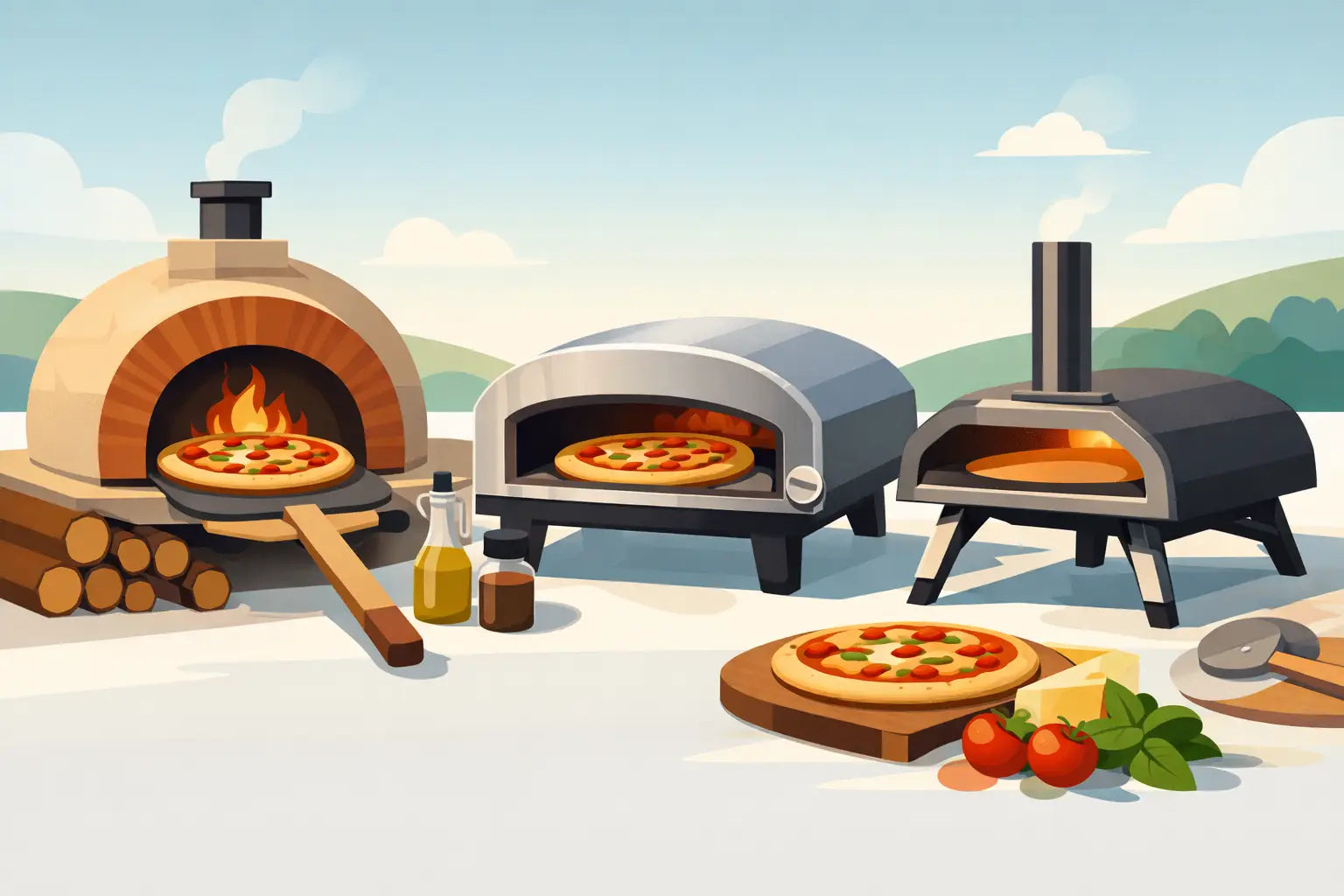
Gas, wood, or electric pizza ovens
Fuel type affects more than flavor. It changes installation requirements, day-to-day control, startup time, and operating rhythm.
Gas pizza ovens are often the practical choice for commercial kitchens that need output and predictability. They offer strong heat, fast recovery, and straightforward temperature management. For operators concerned with labor consistency, gas usually gives the cleanest path to repeatable results across shifts.
Wood-fired ovens carry visual appeal and a distinctive live-fire character, but they require more from the operator. Fire management is part of the cooking process, and that takes skill, attention, and time. In the right concept, that theater is part of the value. In the wrong setup, it can slow service and create unnecessary variability.
Electric pizza ovens deserve serious consideration, especially where ventilation, gas access, or indoor installation limits shape the decision. Many electric models offer precise temperature control and dependable performance in compact footprints. For serious home cooks and some commercial applications, that precision can outweigh the romance of flame.
There is no universal winner here. The best fuel choice depends on your utility access, staffing, compliance needs, and the experience you want to deliver.
Size, capacity, and the space you really have
Capacity is not just about how many pizzas fit inside the chamber. It is about what happens around the oven. You need room for launch, rotation, retrieval, staging, and safe movement during service. A large oven in a cramped line can create more operational friction than a smaller one with a cleaner workflow.
Commercial buyers should think in terms of hourly production, not just chamber dimensions. How many pizzas must the oven produce at peak without quality drift? How quickly does it recover after consecutive bakes? Can your team work the oven efficiently without crowding adjacent stations?
Home buyers should be just as practical. A compact backyard model may be the better performer for your routine if it heats quickly, stores easily, and encourages frequent use. An oversized unit that takes longer to preheat and dominates the patio can become equipment you admire more than equipment you use.
Why heat retention and recovery matter more than top temperature
The spec that gets attention is maximum temperature. The spec that often matters more is how the oven behaves after the third, sixth, or twentieth pizza. Heat retention and recovery are what protect quality during real service.
An oven may hit an impressive number during preheat and still struggle once orders begin flowing. If the deck loses energy too quickly, the bottom bake weakens. If top heat lags, cheese and toppings finish poorly while the crust dries out. Strong recovery keeps each bake close to the one before it, which is exactly what operators need when the line is moving fast.
That is why build quality matters. Insulation, deck material, chamber design, burner performance, and door construction all influence how well an oven holds temperature and returns to target conditions. Precision in these areas is not marketing language. It is what separates a smooth dinner service from constant correction.
Features that support control, not clutter
Not every feature improves performance. Some add convenience. Some add maintenance. The key is choosing features that support the way you actually cook.
Independent temperature zones can be valuable if your menu includes different pizza styles or other baked items. Digital controls can improve repeatability, especially for teams that need tighter process discipline. Interior lighting and clear visibility help reduce unnecessary door opening, which protects heat stability.
On the other hand, more complexity is not always better. If your operation values speed and simple training, a straightforward oven with dependable controls may outperform a more advanced model that slows your team down. Precision is useful only when it is practical in service.
Pizza ovens for restaurants versus serious home setups
Commercial and residential buyers often ask the same question in different ways: what will hold up, and what will actually improve my results? The answer starts with workload.
Restaurants need ovens built for repetition, recovery, and durability. The machine has to perform through lunch, dinner, and back-to-back pushes without drifting out of its lane. That means looking closely at construction, serviceability, heat consistency, and whether the output truly matches projected demand.
Serious home cooks can be more selective about specialization. If your goal is restaurant-level pizza at home, a smaller professional-grade unit may be the smartest choice. You may not need all-day capacity, but you do need enough heat, enough control, and enough build quality to produce excellent results every time friends and family gather around the table.
This is where a performance-focused retailer can make the difference between buying a headline and buying the right tool. Culinary Precisions serves buyers who care about durability, precision, and professional results, which matters when the equipment decision affects both workflow and food quality.
The cost question: purchase price versus operating value
Cheaper equipment can become expensive quickly. If an oven slows ticket times, wastes product, creates uneven bakes, or needs frequent repair, the lower upfront cost stops looking like savings. The better question is what the oven returns in consistency, throughput, labor efficiency, and useful life.
For commercial kitchens, the math is direct. Faster recovery and better repeatability can increase hourly output and reduce remakes. For home buyers, the value often shows up in confidence and frequency of use. Equipment that heats properly, cooks evenly, and feels reliable tends to become part of your routine instead of a weekend experiment.
That does not mean the most expensive option is automatically the smartest. It means you should buy to your actual production and quality targets, not to a spec sheet fantasy. Overbuying can waste space and budget just as easily as underbuying can restrict growth.
What to ask before you buy pizza ovens
A smart purchase usually comes down to a few grounded questions. What style of pizza is the priority? What volume do you need at peak? How much space and ventilation do you truly have? Who will operate the oven, and how much precision do they need built into the controls? How important are quick startup, easy cleaning, and service access?
If you answer those honestly, the field narrows fast. You stop shopping for a generic “best” oven and start identifying the right fit for your kitchen.
The best pizza ovens do not just get hot. They support the standard you want to hold when the pressure is on. Buy with that in mind, and your oven becomes more than a piece of equipment. It becomes a reliable part of service, one that helps you cook with more confidence every single time.